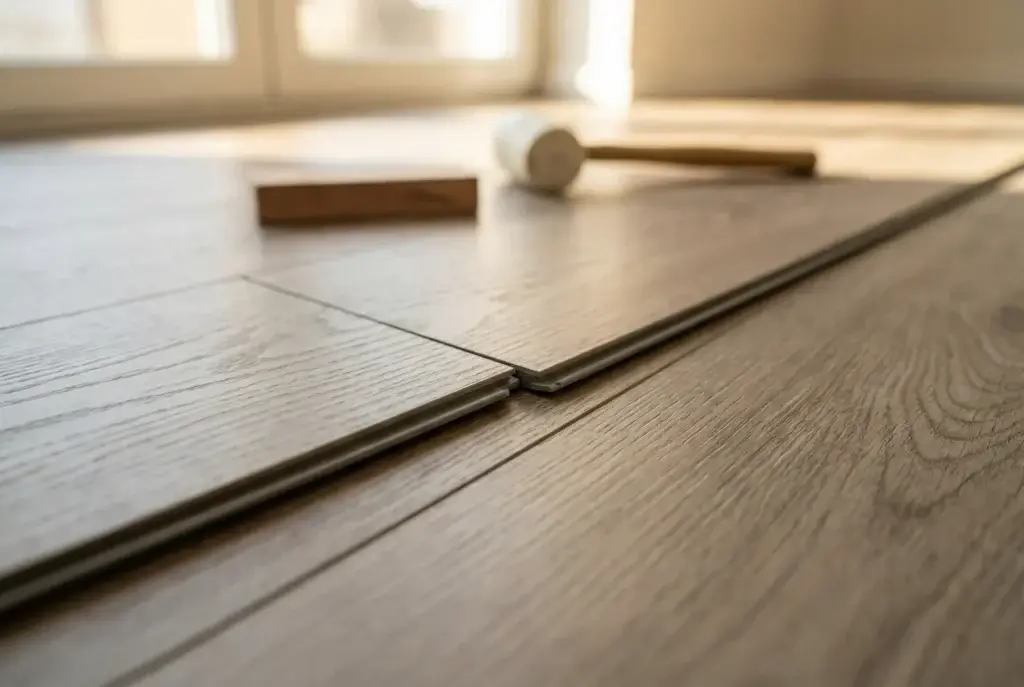

When you’re shopping for LVP or laminate flooring, you’ll encounter two measurements that appear on almost every product spec sheet: the wear layer thickness (measured in mils) and the AC rating. These two numbers tell you more about how a floor will perform over time than almost any other specification — yet they’re rarely explained clearly in showrooms or on product pages. This article breaks down what each measurement means, how they relate to each other, and how to use them to make a smarter buying decision.
What Is a Wear Layer?
The wear layer is the clear, protective top coat on LVP and laminate flooring. It sits above the decorative layer (the printed or photographed image that gives the floor its wood or stone appearance) and is the only thing standing between the surface of your floor and daily foot traffic, furniture, pets, and spills. The wear layer determines how scratch-resistant, stain-resistant, and durable the floor is. A thicker, harder wear layer means the floor will maintain its appearance longer under real-world conditions. A thin wear layer will show scratches, scuffs, and wear patterns much sooner — especially in high-traffic areas.
Understanding Mils: The Thickness Measurement
Wear layer thickness is measured in mils — not millimeters, but thousandths of an inch. One mil equals 0.001 inches, or approximately 0.025mm. This is a very thin measurement, which is why the numbers can seem deceptively small. Here’s a practical guide to what different mil thicknesses mean in real-world terms:
• 6 mil (0.15mm): Entry-level residential. Suitable for very low-traffic areas like guest bedrooms or closets. Not recommended for main living areas, kitchens, or homes with pets.
• 8 mil (0.2mm): Standard residential. Appropriate for moderate-traffic areas in homes without pets or young children. A common spec in builder-grade products.
• 12 mil (0.3mm): Good residential. A solid choice for most residential applications, including living rooms and kitchens. Handles light pet traffic reasonably well.
• 20 mil (0.5mm): Premium residential / light commercial. The most popular tier for homeowners who want long-term durability. Handles pets, children, and heavy foot traffic well. This is the spec we most commonly recommend for active households.
• 28–40 mil (0.7–1.0mm): Commercial grade. Designed for retail, hospitality, and heavy commercial use. Excellent for residential applications with extreme demands, though often overkill for most homes.
Understanding AC Ratings: The Performance Classification
AC ratings (Abrasion Class ratings) are a European standard — developed by the Association of European Producers of Laminate Flooring (EPLF) — that classifies flooring by its resistance to abrasion, impact, staining, and other forms of wear. The AC rating system runs from AC1 through AC6, and it applies primarily to laminate flooring, though some manufacturers use it for LVP as well.
• AC1: Moderate residential. Suitable for light-traffic areas like bedrooms. • AC2: General residential. Appropriate for living rooms, dining rooms, and bedrooms. • AC3: Heavy residential / moderate commercial. The minimum we recommend for most homes. Handles main living areas, kitchens, and hallways. • AC4: General commercial. Excellent for residential use in high-traffic areas. A strong choice for active families. • AC5: Heavy commercial. Designed for retail and commercial environments. Exceptional durability for residential use. • AC6: Heavy commercial / industrial. Rarely needed in residential applications.
For most homeowners, AC3 is the minimum acceptable rating for main living areas, and AC4 is the sweet spot for active households.
How Mils and AC Ratings Relate
It’s tempting to assume that a higher mil count automatically means a higher AC rating — but this isn’t always the case. The AC rating is determined by a series of standardized tests (including abrasion resistance, impact resistance, stain resistance, and swelling at edges), not just by thickness. A thicker wear layer generally performs better in abrasion tests, but the hardness and composition of the wear layer material also matters significantly. Some manufacturers use harder aluminum oxide coatings that outperform thicker but softer wear layers. The most reliable approach is to look at both measurements together: a 20 mil wear layer with an AC4 rating is a more complete picture of durability than either number alone.
What About Laminate?
Laminate flooring uses a slightly different construction than LVP. The wear layer on laminate is typically a melamine resin overlay, and its thickness is measured in grams per square meter (g/m²) rather than mils — though some manufacturers do provide mil equivalents. The AC rating system was originally developed for laminate and remains the most widely used performance classification for laminate products. When evaluating laminate, prioritize the AC rating and the total thickness of the plank (thicker laminate, typically 10–12mm, feels more solid underfoot and is more forgiving over minor subfloor imperfections).
Practical Recommendations
For a typical Raleigh home with moderate traffic and no pets, a 12 mil wear layer with an AC3 rating is a reasonable minimum for main living areas. For households with dogs, children, or heavy foot traffic, we strongly recommend stepping up to 20 mil with an AC4 rating — the price difference is usually modest, and the performance difference over 10–15 years is significant. For rental properties or commercial applications, 28 mil with an AC5 rating provides the durability needed to withstand higher turnover and heavier use.
The Bottom Line
The wear layer is the most honest predictor of how a floor will look five, ten, or fifteen years from now. When a product seems too good to be true on price, the wear layer spec is usually where the compromise was made. Understanding mils and AC ratings gives you the tools to evaluate products on their actual merits — not just their marketing.